Keep Ad-Hoc Voice & Video Alive During Teams ↔ Google Workspace Transitions

 November 10, 2025
 February 12, 2026


Table of contents
- 1. The collaboration spectrum across dissimilar environments
- 2. What breaks during migration, coexistence, and M&A
- 3. The cost of broken escalation
- 4. NextPlane OpenHub restores the missing link: Native voice & video across Teams and Google Workspace
- 5. What this looks like in the real world
- 6. Why organizations choose OpenHub for cross-platform escalation
Most work starts in chat.
But when the topic gets complex, urgent, or sensitive, people do what people naturally do: they stop typing and start talking.
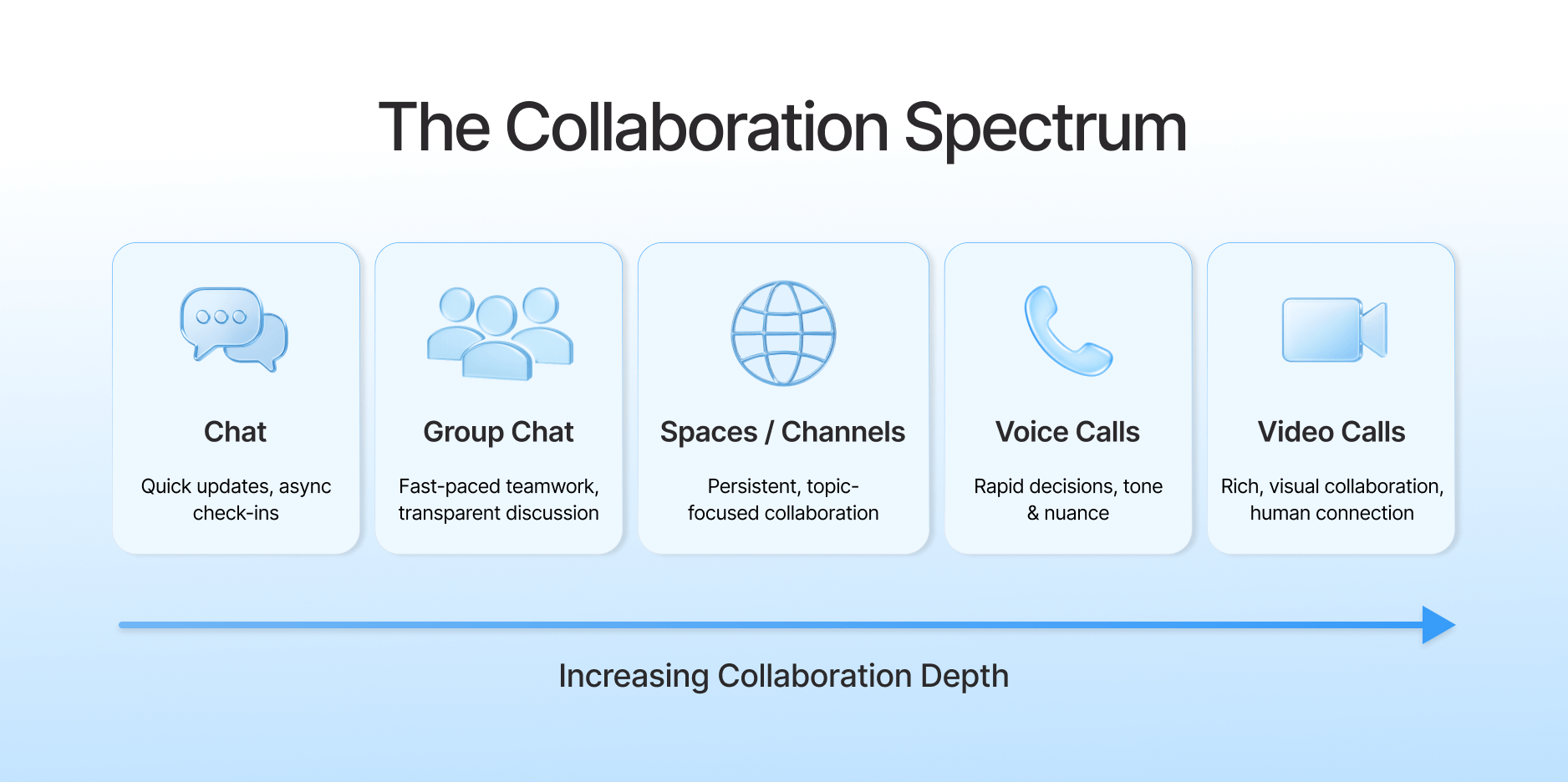
That’s the collaboration spectrum in real life: chat → voice → video
And the most critical moment in that spectrum is ad-hoc escalation—when someone needs a quick call now to unblock a decision, resolve a misunderstanding, or align in minutes rather than burning 30 messages.
The problem?
During Teams ↔ Google Workspace transitions—migration, coexistence, mergers and acquisitions, divestitures—organizations often end up with two isolated collaboration islands. Messaging might still work (sometimes), but users lose the ability to move seamlessly from a chat thread to a voice or video call across environments.
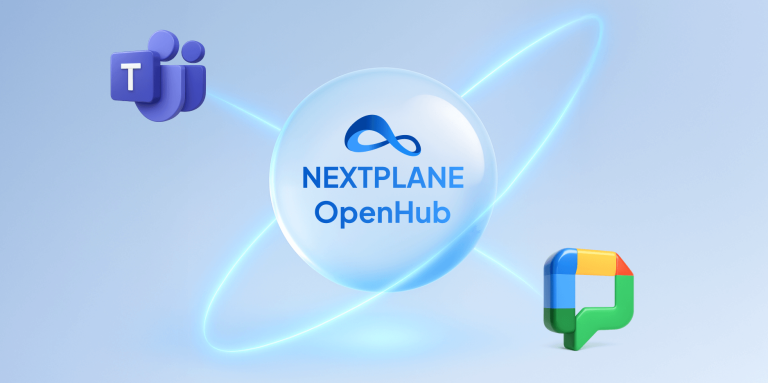
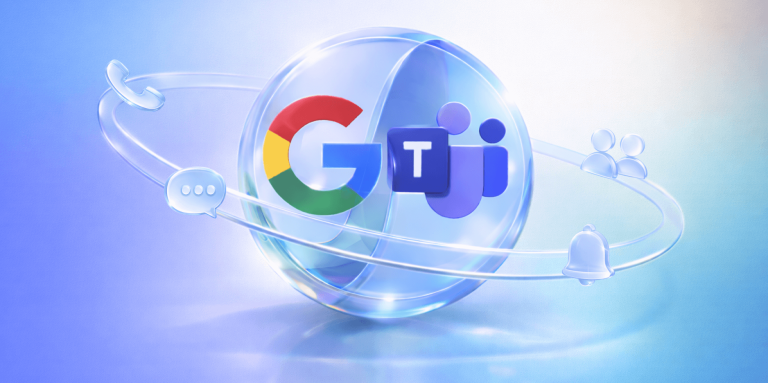
NextPlane OpenHub bridges that gap with native voice and video interoperability between Microsoft Teams and Google Workspace—so teams can escalate conversations instantly, without switching tools or changing how they work.
The collaboration spectrum across dissimilar environments
Collaboration isn’t a single mode. It’s a continuum that teams move through depending on urgency and complexity:
- Chat (1:1/ group/spaces/channels): great for quick updates, sharing links, and async coordination
- Voice: fastest way to resolve nuanced or complex issues without the overhead of scheduling
- Video: best when visuals, trust-building, or sensitive conversations matter
In a single platform, moving along this spectrum is easy.
In dissimilar environments—Teams on one side, Google Chat on the other—that natural flow breaks right where it matters most: escalation.
What breaks during migration, coexistence, and M&A
In transitions, users don’t stop collaborating—work still needs decisions, approvals, troubleshooting, and alignment. But when teams are split across Teams and Google Workspace, the “hop-on-a-call” moment becomes friction:
- “Can you join my meeting?” becomes “Do you have the right account? The right link? The right client?”
- A 2-minute call becomes 20 minutes of tool juggling
- Ad-hoc becomes “let’s schedule something,” which often means “this gets delayed”
And when people can’t escalate naturally, they improvise.
The cost of broken escalation
1) Shadow IT (symptom, not the root problem)
When people can’t move from chat to voice/video across platforms, they reach for whatever works—personal Zoom, WhatsApp, FaceTime, phone calls—often outside governed, auditable systems. Not only does this expand your attack surface, it also eats up as much as 40% of all IT spend, according to Gartner.
2) Time loss from switching and context rebuilding
Even when a workaround is “approved,” switching apps and rebuilding context kills momentum—especially in fast-moving operational conversations. Believe it or not, context switching can drain as much as five full weeks of productivity per employee.
3) A degraded employee experience during already-stressful change
Platform transitions are hard enough. If the day-to-day experience becomes clunky, frustration rises, and adoption suffers.
NextPlane OpenHub restores the missing link: Native voice & video across Teams and Google Workspace
NextPlane OpenHub is a cloud-native, standards-compliant interoperability layer that connects Microsoft Teams and Google Workspace—now including native voice and video interoperability.
With OpenHub, users can:
- Escalate a chat to voice or video from where they already are
- Join natively from the other platform—without forcing everyone into the same client or workflow
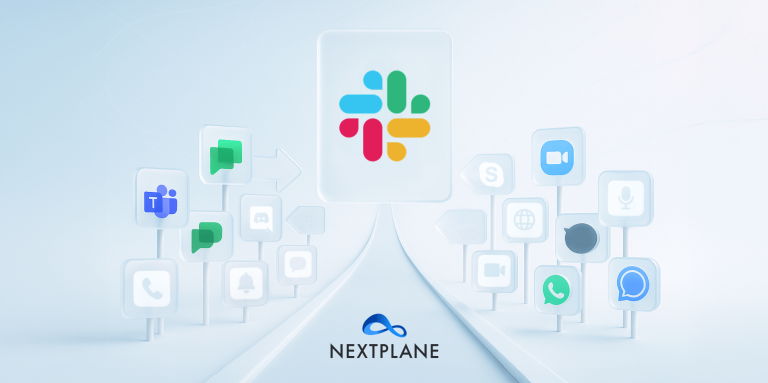
The result: Teams and Google Workspace users can seamlessly collaborate across the full spectrum—chat → voice → video—as if they were in one environment.
What this looks like in the real world
A chat thread starts like any other.
A Google Workspace user pings a Teams user with a simple question: “Can you please take a quick look at this? We need an answer before we reply to the customer.”
Two minutes later, they’re on a call—without switching ecosystems, creating friction, or losing the thread.
Now multiply that flow across:
- Incident response: “Join now—this is Sev1.”
- Sales + engineering: “Can we support this requirement?”
- Finance + compliance: “We need a quick confirmation before close.”
- Distributed teams: “Let’s talk this through—faster than typing.”
This is why ad-hoc voice and video still matter: It’s the fastest path from ambiguity to alignment.
Why organizations choose OpenHub for cross-platform escalation
Seamless interoperability isn’t just convenience. It’s risk reduction and velocity.
Keep conversations governed
OpenHub helps keep users in IT-approved applications and reduces the need for risky and costly workarounds.
Deliver a native experience
Users stay in their preferred platform while still collaborating end-to-end across environments.
Security-first architecture
OpenHub doesn’t store messages, files, or chat histories and passes data via APIs. It uses delegated-level permissions rather than application-level permissions—helping organizations strengthen their cybersecurity posture by avoiding the need to grant excessive privileges to enable interoperability and protecting against high-risk entry points.
Cost efficiency
OpenHub can use free guest accounts as proxy identities, so users don’t need multiple licenses to collaborate across platforms.